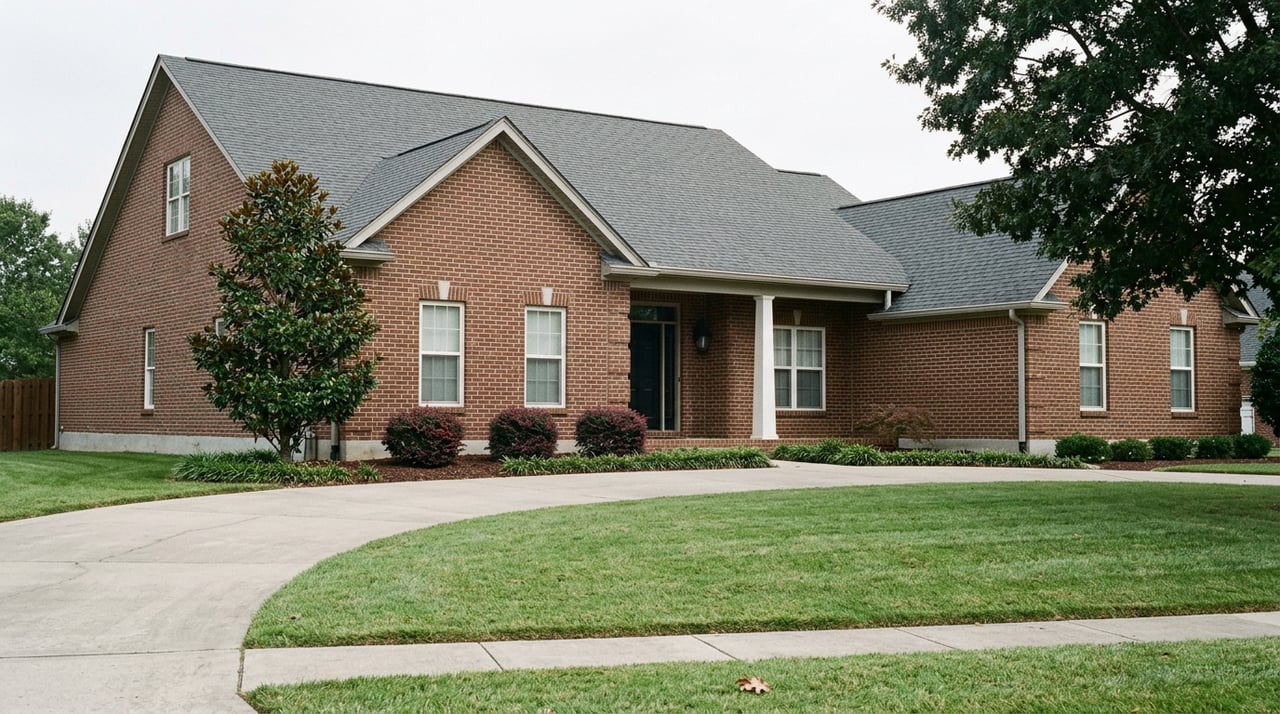
Scroll through new-construction listings in Flowood right now and you will notice a phrase that shows up again and again: post-tension engineered foundation with deep footings and underground drainage. It reads like standard builder language, the kind of detail you skim past on your way to the photos of the kitchen island. It is not standard. It is there because of what is under the lot, and it is worth stopping on before you sign anything.
Why builders in Flowood spec this at all
Central Mississippi, including the Jackson metro that Flowood sits inside, is built over an expansive clay formation known as Yazoo clay. Geotechnical engineers who work in the area describe it as one of the more difficult soils to build on in the country. When it gets wet, it can swell by more than 200 percent and generate up to 25,000 pounds of pressure per square foot against whatever is sitting on top of it. A typical wood-frame house exerts somewhere between 200 and 375 pounds per square foot back down into the ground. That gap is not small. It means the clay under a Flowood lot can push up on a foundation with far more force than the house itself puts down.
A peer-reviewed field study published in the ASCE Journal of Performance of Constructed Facilities measured this movement directly on central Mississippi buildings and found heave rates that continued for nearly two years following a drought, with some measurement points showing close to an inch of movement per year. That is the mechanism behind the phrase you keep seeing on listing sheets. The post-tension slab, the deep footings, and the underground drainage system are not upgrades. They are the industry's standard response to a soil that will otherwise crack a slab and shift a house over time.
The warranty that sounds better than it is, depending on how you buy
Mississippi's New Home Warranty Act gives buyers real protection on paper. Under Mississippi Code Section 83-58-5, a builder automatically warrants a new home against defects for one year and against major structural defects for six years following the completion date. Those minimums cannot be reduced by the builder or waived by the buyer, with one narrow exception written directly into the statute: if the home is built on land the buyer already owned before construction started, the builder can ask that buyer to sign a written waiver excluding damage caused by soil conditions or soil movement from the warranty entirely.
That exception does not reach most of the to-be-built homes going up in Flowood's larger subdivisions, where the builder owns the lot until closing and sells house and land together as a package. It applies squarely to custom construction, the kind where a buyer purchases a lot first and then contracts separately for the build, which is common on the larger estate lots in developments like the gated community on Highway 25 and Lakeland Drive. If that describes your situation, the exact risk your post-tension foundation is engineered to manage is the one risk Mississippi law lets a builder ask you to waive in writing.
Here is what that looks like laid out plainly:
| Covered under Mississippi's New Home Warranty Act | Can it be waived in writing? |
|---|---|
| One-year warranty against defects from non-compliance with building standards | No |
| Six-year warranty against major structural defects | No |
| Manufacturer warranties on plumbing, electrical, and HVAC fixtures | No |
| Damage caused by soil conditions or soil movement | Only if you already owned the land before construction began and sign a written waiver |
This is not a reason to avoid new construction in Flowood. It is a reason to know which kind of buyer you are in the eyes of the statute, and to read your purchase agreement line by line before your earnest money goes down.
Where this shows up across Flowood's active subdivisions
Flowood has several new-construction communities moving right now, and the soil question follows the ground, not the subdivision name. Waterpointe, the 230-acre mixed-use development going in behind the Dogwood Festival Shopping Center, is planned for 560 residences alongside 800,000 square feet of commercial space, wharf-style waterfront dining, and a town square, according to the City of Flowood's own construction update. The city estimates the project will generate roughly $250 million in construction activity, with Community Bank building its new headquarters there as an anchor tenant.
Farther out on Highway 25 and Lakeland Drive, a gated master-planned community is being built across 253 acres with 206 lots split into garden, village, and estate tiers, from garden lots as small as 0.19 acres with a 2,000-square-foot home minimum up to estate lots approaching five and a half acres requiring 4,000 square feet or more. Those estate lots are exactly the scenario where a buyer might purchase land first and contract the build separately, which is where the soil-waiver exception above actually comes into play. Closer to the center of town, subdivisions like Bristol Crossing sit near the Flowood walking trail system, and gated communities such as Kensington continue to add inventory, both sold as builder-owned house-and-lot packages where the exception would not apply. Every one of these is new dirt over the same regional clay, which is exactly why the post-tension foundation language keeps appearing across builders and price points rather than being tied to any one development.
Questions worth asking before you sign
If you are under contract or close to it on a new home in Flowood, these questions matter more than the finish selections:
- Ask whether you are buying house-and-lot together from the builder, or buying the land first and contracting the build separately. That one distinction determines whether a soil-movement waiver can legally touch your warranty at all.
- If you already own the lot, ask directly whether the builder's contract includes a soil-movement waiver. If it does, bring it to an independent structural engineer or real estate attorney before you sign, since the statute allows the waiver but does not require you to accept it.
- Ask for the lot-specific geotechnical report, not the subdivision's general engineering summary. Soil conditions can vary within the same development, and a report written for the neighborhood as a whole will not tell you what is under your specific pad.
- Confirm in writing when your six-year warranty clock actually starts. The statute ties it to the completion date, not your contract date, which matters on a to-be-built home where construction can run months past signing.
This is the kind of question a construction background makes second nature to ask, and it is exactly where a background in homebuilding and lending changes the conversation with a builder's sales office. Numbers on a spec sheet mean less than what they are backed by in the contract.
FAQ
Does a post-tension foundation cost more than a standard slab? It typically adds to the foundation line item compared to a conventional slab, since it requires additional engineering, steel cable tensioning, and deeper footings. Builders in Flowood generally bake this into the base price on new construction rather than listing it as an option, given how common expansive clay is across the area.
Can I get an independent inspection of a foundation before the home is finished? Yes, and for a to-be-built home this is often the most useful time to do it, since a structural engineer can review the foundation before the slab is covered by framing and finishes.
If I buy an existing home in Flowood and resell it within the six-year warranty window, does the warranty transfer? The statute defines an owner as the initial purchaser and any successors in title while the warranty period is still running, so a structural warranty issued at construction can carry forward to a subsequent buyer within that same six-year window.
Whether you are weighing a to-be-built lot in Waterpointe against an established home closer to town, the questions above are worth working through before you are past your due diligence period. If you already own in Flowood and are curious what your equity looks like with this much new construction moving through the market, a good place to start is a free home valuation with Stephanie Prisock Nix, backed by a background in construction and banking that reads a contract the way it reads a foundation.
This article is general information, not legal, tax or financial advice. Consult a qualified professional about your situation.